
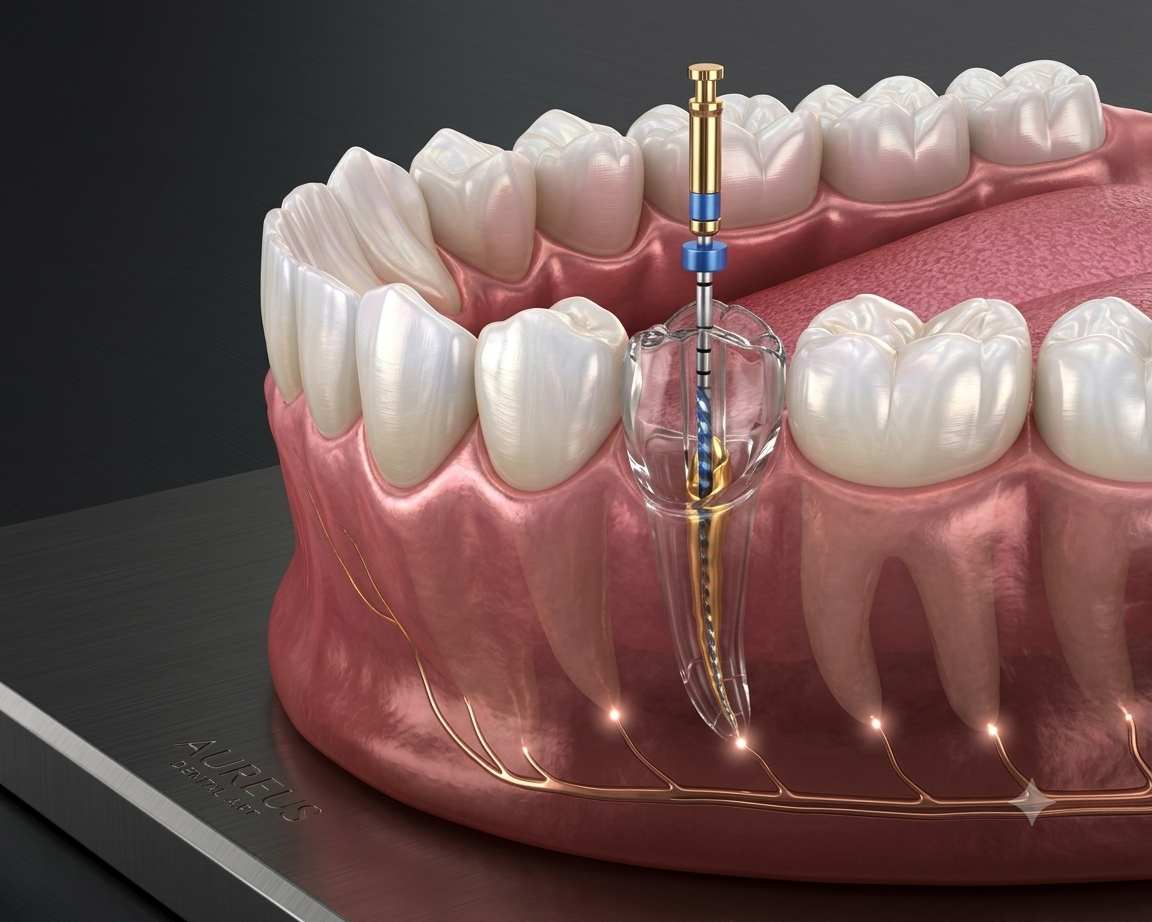
ROOT CANAL RETREATMENT
While many root canal treatments are successful long-term, some teeth may continue to experience infection, discomfort, or healing complications over time.
Root canal retreatment is performed when a previously treated tooth requires additional endodontic care.
At Dental Creation Chiang Mai, retreatment cases are approached with detailed assessment, enhanced visualization, and conservative treatment planning whenever preservation of the natural tooth remains feasible.
Why Root Canal Retreatment May Be Needed
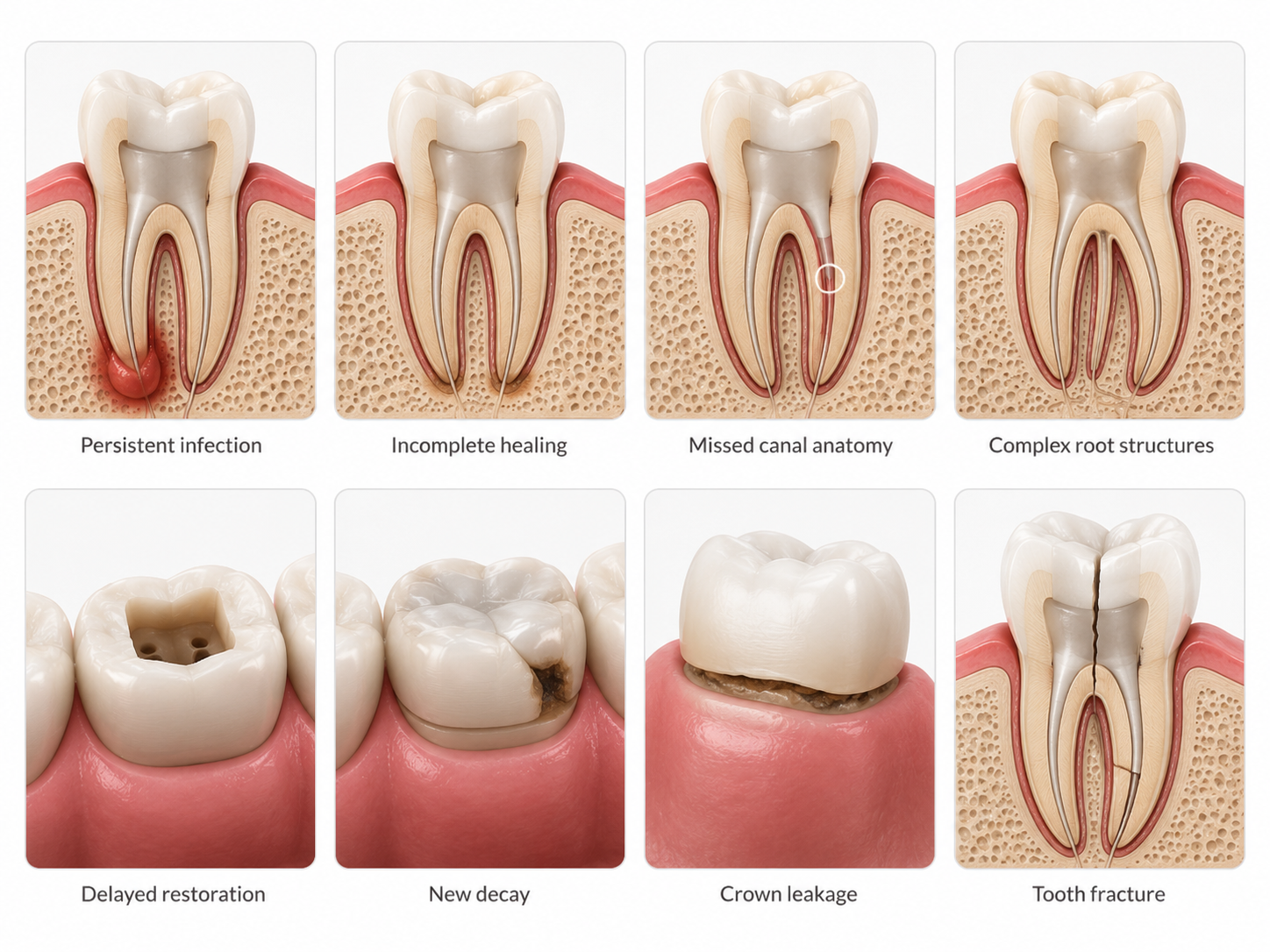
A previously treated tooth may require retreatment due to:
Persistent infection
Incomplete healing
Missed canal anatomy
Complex root structures
Delayed restoration
New decay
Crown leakage
Tooth fracture
Some patients may experience symptoms such as pain, swelling, or tenderness, while others may have no noticeable symptoms despite underlying pathology.
The Retreatment Process
Retreatment involves reopening the tooth to:
Remove previous filling materials
Reassess canal anatomy
Disinfect the canal system
Address hidden or untreated canals
Reseal the tooth
Microscope-assisted techniques may help improve visualization during complex retreatment procedures.
Have a dental concern?
Let our team help.

Related Endodontic Treatments


Frequently Asked Questions
-
In many cases, retreatment may help manage persistent infection and preserve the tooth.
-
Not all teeth are suitable for retreatment. Recommendations depend on restorability, fracture status, bone support, and long-term prognosis.
-
Retreatment procedures are often more complex than initial treatment due to altered anatomy and previous restorations.
-
Alternative treatment options may include extraction and replacement options such as implants or bridges.